



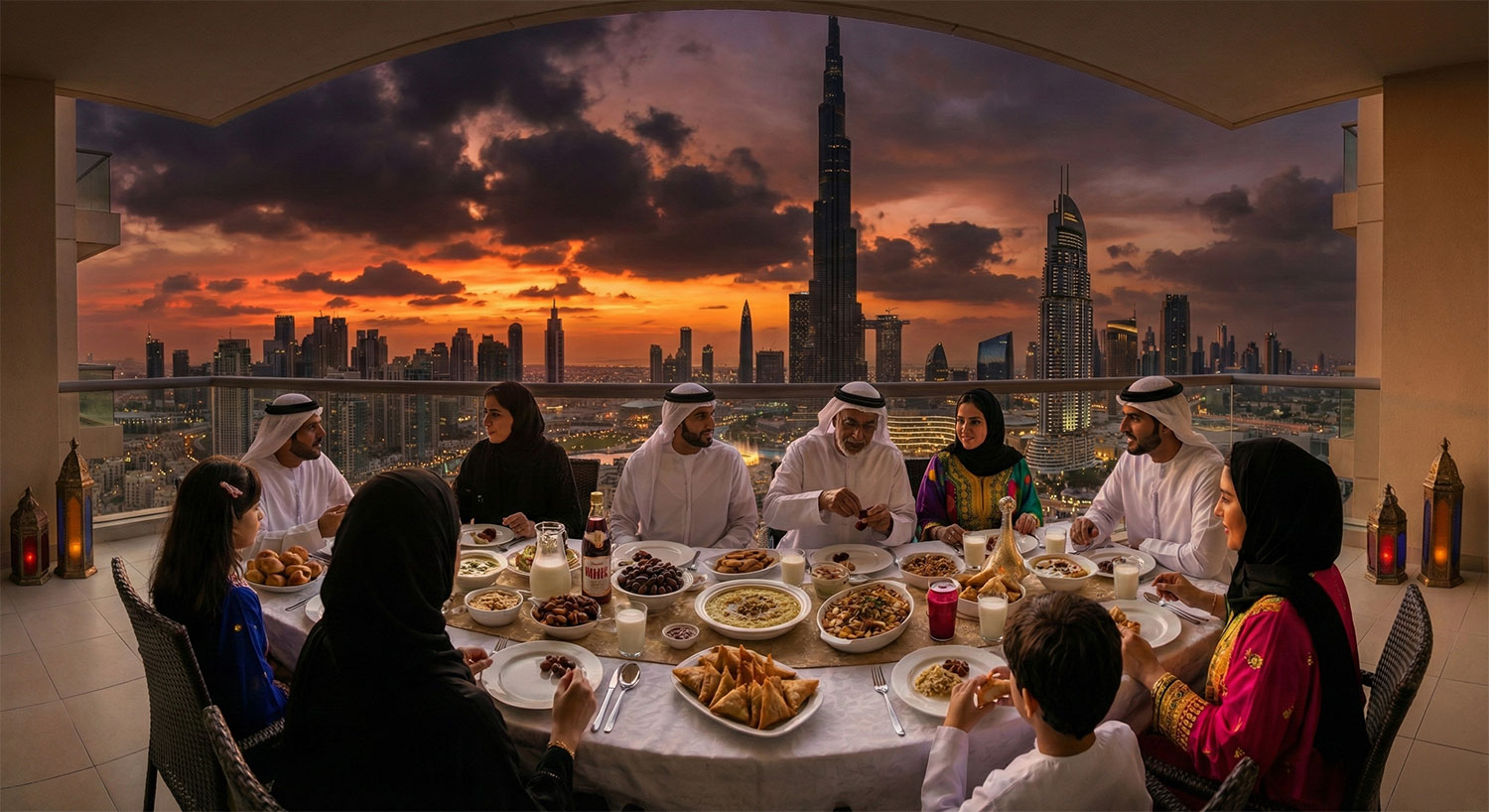
There is nothing more beautiful than experiencing Ramadan through the eyes of those who live its moments up close. It is here that an authentic picture of the holy month emerges as it is truly lived in the Emirati neighbourhood, where the meanings of connection are reflected, homes pulse with a spirit of sharing, and families gather around traditions passed down through generations.
Even before the blessed month begins, Emirati homes embark on a journey of preparation. Soft lighting and Islamic, heritage-inspired details adorn the spaces, creating a scene that blends authenticity with a modern spirit. Family members take part in these preparations with enthusiasm that reflects their longing for Ramadan. Many families also purchase tableware and linens that fill the markets during this period—particularly home goods stores that witness a noticeable surge in visitors—in readiness for dining tables that bring loved ones together and reflect the generosity of Emirati hospitality.
Months before Ramadan, many women and young girls begin selecting the mukhawar, a traditional garment that embodies elegance and Emirati identity. Both young and old are keen to acquire it, in a scene that expresses the joy of welcoming the blessed month and highlights the deep connection between heritage and family life.
With the arrival of the first day of Ramadan, the Emirati home welcomes this blessed guest with a deeply spiritual atmosphere. Family members begin their day with the recitation of the Qur’an, remembrance, and supplication, seeking the month’s blessings and grace. As morning unfolds, those with professional commitments head to work calmly, while the day progresses in harmony—reflecting the family’s ability to balance life’s responsibilities with the spiritual essence of Ramadan.
Preparing iftar is not limited to the mother alone; rather, it becomes a space for family collaboration. Children participate in the preparations, and each family member contributes to setting the table with a spirit of togetherness and affection. This scene reflects the value of teamwork, a defining characteristic of the Emirati family.
As sunset approaches, hearts turn to prayer, and a sense of tranquility fills the home. The moments grow even more special with the anticipation of the iftar cannon (you can read more about it in Ramadaniyat section) , an enduring heritage symbol that continues to announce the time to break the fast and spread joy, while families ensure that all members, especially married children, gather together to complete the warmth of the occasion.
The family begins iftar with dates and laban, following the Prophetic tradition, before heading to perform Maghrib prayer and returning to share the meal. The Emirati table is adorned with traditional dishes such as harees and thareed, alongside Vimto, a drink closely associated with Ramadan memories for many families.
Exchanging dishes among neighbours is a deeply rooted Ramadan tradition through which generosity and solidarity shine. Food becomes a means of strengthening social ties and deepening connections between families.
Among the most popular desserts gracing the Ramadan table are luqaimat, cherished by both young and old. You can explore their recipes—along with a variety of Emirati dishes—in the “Ramadan Flavors” section.
Following Taraweeh prayers, the first family visits begin as relatives connect and exchange Ramadan greetings. Special attention is given to visiting grandparents and elderly aunts, reflecting the authenticity of these traditions and the depth of bonds that society is keen to preserve across generations.
After Taraweeh, families gather around the fwala, where Arabic coffee, dates, and sweets are served in an atmosphere marked by calm conversations and friendly exchanges, fostering closeness among family members.
Taraweeh prayer holds a special place among the people of the UAE, who are keen to perform it in mosques for the sense of spirituality and community it brings. As the last ten nights approach, devotion intensifies; worshippers frequent mosques and observe Qiyam Al-Layl, seeking reward and embracing the blessings of these sacred nights.
Although gatherings are not necessarily a daily occurrence during Ramadan, Emirati families show great care in upholding the values of generosity and responsibility when hosting. When surplus food remains, many promptly donate it through accredited channels and organisations—affirming a culture of giving, reducing waste, and reinforcing social solidarity.
Across the country, Ramadan tents dedicated to providing meals for those in need stand as one of the most prominent expressions of humanitarian solidarity within the Emirati community.
The spirit of volunteerism is especially evident during this month through humanitarian initiatives, awareness campaigns, and donation projects overseen by accredited entities—reflecting a strong sense of responsibility and community cohesion.
This is how Ramadan unfolds in the Emirati neighbourhood: days in which worship intertwines with cherished traditions, and family bonds grow stronger. The holy month remains a season that brings together faith and social warmth in one harmonious experience.
