



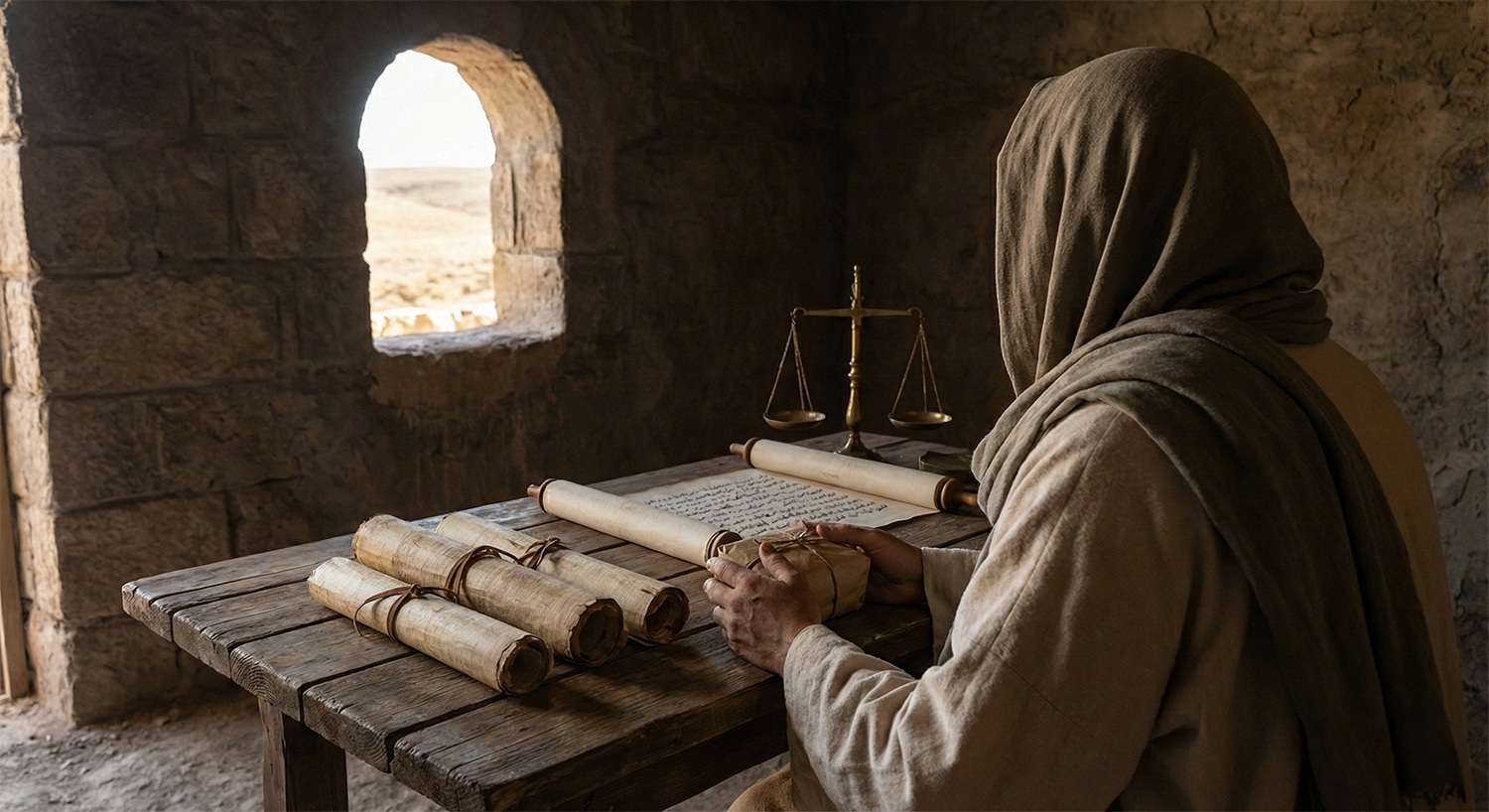
Luqman gained great knowledge and wisdom under the guidance of Prophet Dawud (peace be upon him), until he earned the love of Allah, Who bestowed upon him an abundance of knowledge and wisdom. This qualified him to be a wise man and a vicegerent on earth, and he became known as Luqman the Wise. This title was due to his sharp intellect and exceptional skill in resolving disputes, as he served as a judge for the Children of Israel.
One of the stories that illustrates his extraordinary wisdom and intelligence is that one day, his master brought him a sheep and said, “Slaughter this sheep and bring me the two best morsels from it.” Luqman slaughtered the sheep and brought him both the tongue and the heart. The next day, his master said, “Slaughter this sheep and bring me the two worst morsels from it.” Then he gave him both the heart and the tongue again. His master was astonished by this, and Luqman the Wise said, “There is nothing better than these two when they are pure, and nothing worse than them when they are corrupted.” At that moment, his master freed him because of his wisdom and intelligence. After his emancipation, Luqman decided to leave Egypt and travel to Palestine. This occurred during the period of the prophethood of Dawud (peace be upon him), where he worked as a servant under him. Prophet Dawud recognised Luqman’s wisdom and appointed him as a judge over the Children of Israel. Later, he became a chief judge.
Luqman the Wise, whom Allah granted wisdom, a clear heart and sound judgment, is mentioned in the Quran in Surah Luqman, where Allah highlights aspects of his life and teachings, especially the advice he gave to his son, which Allah preserved in His Book.
Luqman’s Advice to His Son
Luqman the Wise did not keep his wisdom to himself; he wanted to raise his son in the path of goodness and righteousness. He said to him, as stated in the Quran:“And remember when Luqmân said to his son, while advising him, “O my dear son! Never associate anything with Allah in worship, for associating others with Him is truly the worst of all wrongs.” (Luqman: 13)
After instructing him on monotheism, he advised his son on key aspects of righteous living:
The Wisdom Given to Luqman
Luqman exemplified a man who could discern right from wrong and knew that piety, patience and justice are the foundations of a righteous life. The Quran emphasises that Allah granted him wisdom, which is a great blessing: “Indeed, We blessed Luqmân with wisdom, saying, “Be grateful to Allah, for whoever is grateful, it is only for their own good. And whoever is ungrateful, then surely Allah is Self-Sufficient, Praiseworthy.” (Luqman: 12)
According to Tafsir Ibn Kathir and Tafsir Al-Tabari, the wisdom granted to Luqman included understanding matters deeply, advising others, guiding them to goodness and making sound judgments in all situations.
The Wisdom Given to Luqman
Luqman exemplified a man who could discern right from wrong and knew that piety, patience and justice are the foundations of a righteous life. The Quran emphasises that Allah granted him wisdom, which is a great blessing: “Indeed, We blessed Luqmân with wisdom, saying, “Be grateful to Allah, for whoever is grateful, it is only for their own good. And whoever is ungrateful, then surely Allah is Self-Sufficient, Praiseworthy.” (Luqman: 12)
According to Tafsir Ibn Kathir and Tafsir Al-Tabari, the wisdom granted to Luqman included understanding matters deeply, advising others, guiding them to goodness and making sound judgments in all situations.
Thus, Allah preserved Luqman’s mention in His Book and taught us that wisdom is a great blessing, and a righteous person seeks to pass on knowledge and guidance, especially to his children, through good example and sound advice.
